

Honeycomb Paper Mat: What to Check Before Bulk Sourcing
Honeycomb paper mat is a protective paper-based material used where a product needs a cushioning, separation or surface-protection layer. Before buying in bulk, define the job it must perform, the required dimensions and thickness, the way it will be converted or applied, and the tests that will show whether it works in your pack.
An independent, practical guide for buyers, packaging teams and operations managers. The right specification depends on the actual product, handling route and business requirements.
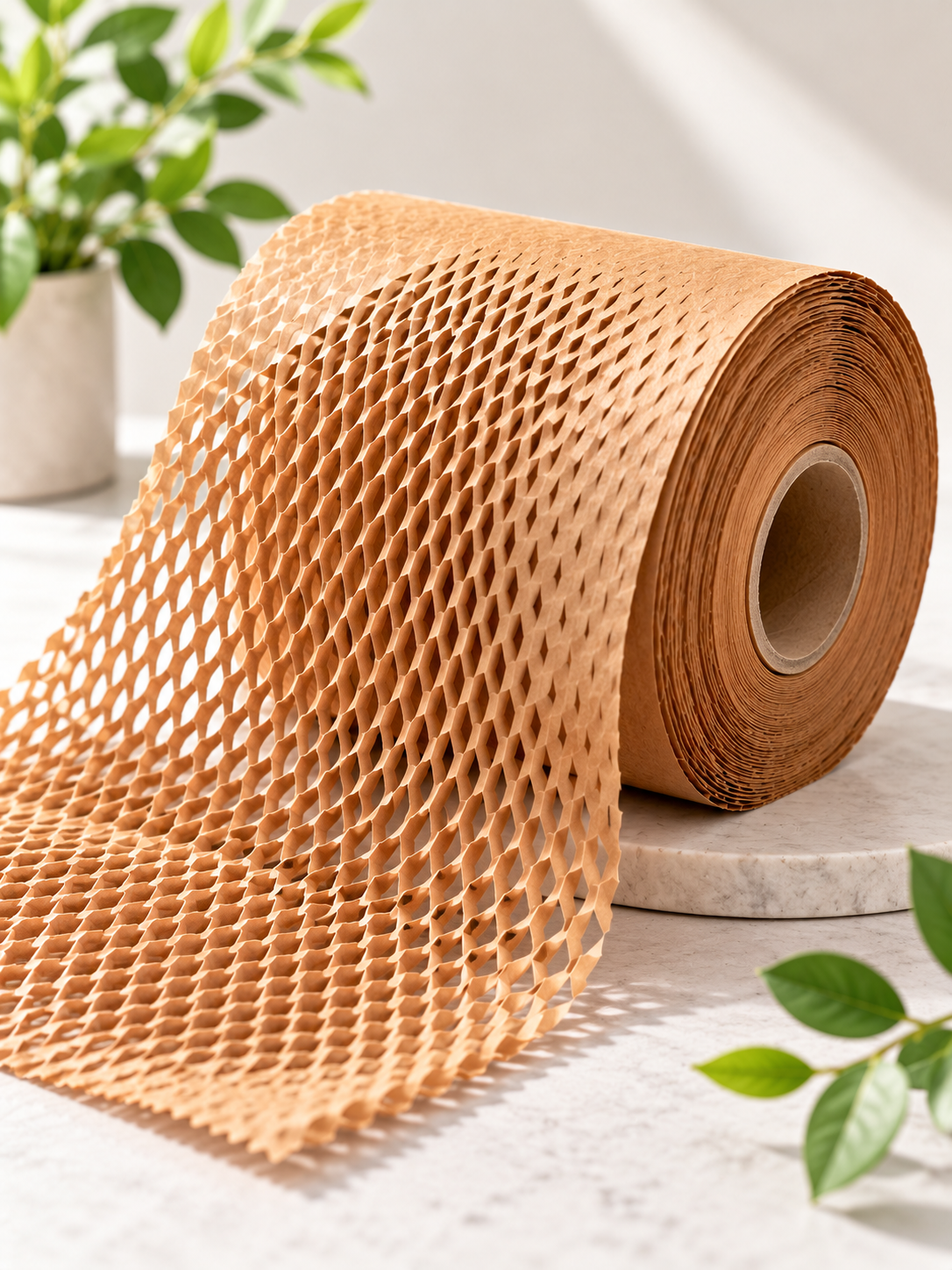
1. What is honeycomb paper mat?
Honeycomb paper mat is a structured paper-based cushioning or separation material whose geometry creates spaces and layers that can help distribute contact and provide protective separation. Commercial products vary in paper grade, thickness, density, format, roll or sheet dimensions and intended application. The word “honeycomb” alone is not a complete performance specification.
Do not assume all mats behave the same. Some are designed for surface separation or interleaving; others are intended to provide cushioning in a specific packaging construction. Confirm whether the supplier’s product is suitable for direct contact, repeated compression, heavy loads, or any particular protective use you have in mind.
2. Where it may be useful—and where caution is needed
Potential applications include separating products or components, creating a protective layer between surfaces, adding cushioning within a pack, and supporting packaging workflows that use paper-based materials. Suitability depends on the material’s construction and the actual product.
- Surface separation: check whether the paper surface can rub, shed fibres or mark the finish.
- Interleaving: confirm that the mat does not compress so much that products touch each other.
- Impact cushioning: verify performance through a suitable test; thickness alone is not proof of impact protection.
- Heavy products: concentrated loads may flatten or damage a structure. Test the full load and support geometry.
- Moisture-sensitive goods: paper-based materials can be affected by humidity and wet handling. Add a separate moisture-control strategy if required.
3. Write a complete purchasing specification
Before requesting quotations, describe the intended use and record the measurable requirements. This reduces the risk of comparing different products under the same generic name.
| Specification field | What to record | Why it matters |
|---|---|---|
| Application | Interleaving, cushioning, separator, surface protection or other defined job | Different jobs require different performance. |
| Thickness | Nominal thickness and measurement method, if supplied | Thickness can affect fit, compression and carton dimensions. |
| Width and length | Sheet or roll size, usable width and tolerances | Determines coverage, waste and line compatibility. |
| Material construction | Paper grade, layers, structure and any coating or adhesive | Influences handling, finish compatibility and end-of-life options. |
| Load conditions | Product weight, contact area, stacking or compression exposure | Helps define performance tests. |
| Quality requirements | Acceptable variation, defects, cleanliness and packaging condition | Supports incoming inspection and repeatability. |
| Order quantity | Trial quantity, recurring demand and delivery schedule | Helps balance price, stock and risk of obsolescence. |
4. Design the mat into the complete package
Measure the product and the entire packed assembly—not only the bare item. A mat that adds thickness can change carton fit, divider spacing, closure pressure and the number of units that fit in a shipping case. If the mat is cut to size, account for cutting tolerance, nesting layout and trim waste.
Check how the mat is retained. If it can slide out of place during handling, it may no longer separate the surfaces it was meant to protect. For multiple products, verify that the mat remains between items and that edge or corner contact cannot bypass it.
Consider the complete load path. A separator may prevent surface contact without providing enough impact cushioning. A cushioning layer may compress under stacking and lose separation. If the item is heavy, tall, fragile or valuable, combine the mat with appropriately designed inserts and an outer carton rather than relying on one layer.
5. Test before committing to a bulk order
- Fit test: cut or place the material in the actual pack and check dimensions, folds, overlap and closure.
- Surface test: inspect the product after contact and movement for scratches, marks, dust or fibre transfer.
- Compression test: assess whether the material flattens under the expected load and whether it recovers, if recovery matters.
- Movement test: close the carton and check whether the mat shifts or allows items to touch.
- Handling test: evaluate the complete pack under representative handling. For critical shipments, use a suitable documented transit test.
- Repeatability test: ask more than one operator to pack the product using the written method.
Set pass/fail criteria before testing. Examples include no visible surface damage, no product-to-product contact, acceptable carton closure and no displacement beyond a defined limit. Criteria should match the product’s risk rather than being chosen after results are seen.
6. Storage and handling considerations
Keep paper-based mat clean, dry and protected from direct water exposure, excessive humidity, dust and crushing. Store it on a stable surface and avoid stacking in a way that deforms the material. Follow the supplier’s handling guidance, especially if the product has a specific orientation or compression limit.
Use stock rotation and identify batches where consistency matters. If a shipment arrives with crushed edges, dampness, contamination or inconsistent thickness, document the condition before use and compare it against the agreed specification.
7. Supplier questions and total-cost calculation
Ask suppliers to confirm the exact construction, dimensions, thickness tolerance, packing format, minimum order quantity, lead time, batch consistency, storage recommendations and whether sample material is available. Ask what evidence supports any performance claim and whether the product is intended for your application.
Compare the cost per usable packed unit, not just the price per sheet, kilogram or roll. Include cutting waste, overlap, labour, storage, damaged material, shipping and any extra insert or carton required. A lower purchase price may not be lower total cost if more material is used or the packing process becomes slower.
8. Incoming quality checklist
- Product description matches the purchase order.
- Dimensions and thickness fall within the agreed tolerance.
- Material is clean, dry and free from crushing or obvious damage.
- Rolls or sheets are protected during transport.
- Batch or lot information is retained where relevant.
- Sample performance matches the approved trial.
- Any variation is recorded and resolved before routine production use.
Honeycomb paper mat for heavier and industrial products
Where a paper mat may help
Honeycomb paper mat is intended for applications where a broader, thicker or more substantial paper-based protective format is required than a light wrapping sheet. Depending on its exact construction and performance, it may be considered for separating, wrapping or cushioning suitable industrial items such as metal components, hardware, machinery parts and selected automobile components. These are application possibilities, not a blanket load rating. The actual mat specification and pack design must be checked against product mass, geometry and handling risk.
Do not confuse a mat with a load-bearing engineered honeycomb panel
Packaging products sold under similar names can have very different constructions. A flexible honeycomb paper mat is not automatically equivalent to a rigid structural honeycomb panel or a certified cushioning component. Ask whether the material is designed for wrapping, interleaving, surface protection or impact cushioning, and request relevant performance information. Never infer a safe load capacity from thickness or appearance alone.
Protect metal surfaces from abrasion and corrosion
Machined, painted, polished or plated metal parts can be damaged by rubbing, trapped particles or moisture. A paper mat may help separate surfaces, but it is not necessarily a corrosion inhibitor or moisture barrier. Assess the metal finish, storage duration, humidity and whether a compatible protective film or corrosion-control method is required. For parts with sharp edges, check whether the material tears or exposes the product during movement.
How to evaluate a mat sample
- Record the product weight, dimensions, shape, edge condition and surface finish.
- Define whether the mat must wrap, cushion, separate or prevent scuffing.
- Test the actual wrap pattern and number of layers.
- Check whether the material tears, compresses, slips or loses coverage.
- Inspect the product after handling and the planned distribution test.
- Record material usage and repeatability for packing staff.
Questions to ask before bulk sourcing
- What exact product construction, thickness and width are supplied?
- Is it intended for wrapping, separation, cushioning or a combination?
- Are there limitations for sharp edges, heavy loads or moisture exposure?
- What dimensions, roll length and tolerance apply?
- Can a representative sample be tested before a bulk order?
- How should it be stored and handled to preserve condition?
Risks to review before using a mat on industrial goods
Sharp metal edges cut the mat: inspect edge radii and burrs, and test whether the material remains intact through wrapping and handling. Sharp edges may need edge protection before a paper mat is applied.
Heavy parts move on a pallet: wrapping material alone may not restrain a load during forklift movement or braking. Assess the full unit load, including separators, blocking, strapping and pallet configuration where relevant.
Surfaces show marks after storage: investigate pressure, trapped particles, moisture and material contact. Test the actual storage duration and environment; short bench trials may not reveal marks that develop over time.
Mat thickness is mistaken for load rating: ask for the intended function and available performance information. Do not assign a safe weight or stacking limit unless it is supported by relevant data and a suitable test.
What should a bulk trial record?
Record the product or part number, surface condition before packing, mat specification, wrapping pattern, number of layers, any additional protection, packed dimensions, handling conditions and inspection outcome. For repeat industrial orders, keep the approved method with the part specification and review it after any material or product change.
Questions for industrial and export packaging teams
Before selecting a mat, define the required function: surface separation, abrasion prevention, wrapping, light cushioning or part of a larger load-protection system. State the part’s mass, dimensions, sharp edges, surface finish, storage duration and expected handling. If the goods are palletised or moved by forklift, assess the full unit load rather than evaluating the mat in isolation.
Ask for the exact specification and a sample. Confirm whether thickness and dimensions are nominal, how the material should be applied, and what limitations the supplier knows about. If a particular load rating or compression performance is required, request relevant test evidence; do not infer capacity from appearance.
For export shipments, account for the full route: warehouse storage, inland transport, port or terminal handling, sea or air transport and final delivery. Moisture, vibration, stacking and repeated handling may create different risks. A bench test is useful for screening, but high-risk shipments may require a more formal packaging validation appropriate to the route and product value.
Industrial packing process controls
For repeat industrial shipments, make the protection method part of the packing instruction. Identify the contact surfaces, wrap direction, overlap, number of layers, edge protection and the way packed parts are placed in a carton or on a pallet. If parts have oil, coolant, sharp burrs or surface treatments, clarify whether the mat is compatible and whether a separate barrier is needed.
Inspect a packed sample after the expected handling sequence. Look for material tears, movement, abrasion, pressure marks and signs of moisture. Where components are heavy, the packaging must also be compatible with lifting and securing procedures. Do not treat the mat as a substitute for load restraint, pallet stability or a suitable outer package.
Application limits, testing and sourcing questions
What does thickness tell you?
Thickness identifies a material dimension but does not independently prove cushioning performance. Paper grade, cell geometry, compression, load distribution and application method all matter. Ask what the measurement represents and whether it applies before or after expansion or compression.
Is a mat suitable for heavy goods?
It may provide separation or cushioning in a suitable pack, but should not automatically be treated as load restraint, pallet stabilisation or engineered blocking. Heavy goods can compress material or concentrate force at small contact points. Define the load, contact area, edge risks and route, then test the complete package. Seek packaging-engineering advice when failure could create safety or major financial consequences.
Separate the required functions
Cushioning manages impact; separation prevents surfaces contacting; surface protection reduces scuffs and abrasion. A mat may contribute to more than one function, but verify it. If scratching is the risk, inspect surface texture and cleanliness. If impact is the risk, test compression and recovery. If movement is the risk, add a restraint design rather than relying on a flat layer.
Bulk specification checklist
- Application and required protection function.
- Thickness and measurement method.
- Width, length, roll or sheet format and tolerances.
- Material construction and surface requirements.
- Expected load, contact area and repeated compression.
- Storage and transport conditions, including moisture.
- Outer package and other inserts.
- Sample approval criteria and test method.
- Quantity, MOQ, lead time, packaging and batch identification.
Test before bulk purchase
- Define the failure to prevent and conditions the pack will face.
- Use the actual product or a representative sample.
- Build the complete pack with the intended mat, carton and restraints.
- Inspect fit, compression, shifting and abrasion.
- Test for the real shipping and stacking risks.
- Inspect for damage and permanent deformation.
- Repeat enough samples to understand variation and approve a written specification.
Storage and supplier questions
Keep paper-based materials dry, clean and protected from crushing. Ask for exact construction and dimensions, intended use, samples, evidence behind performance claims, batch consistency, MOQ, lead time, transport charges, tax treatment, storage guidance and defect-resolution process. For export packs, confirm destination requirements and the complete package performance. Approve a real application, not a catalogue photograph, and retain the tested sample and written specification.
What a good trial record looks like
Record the product or component, its weight and geometry, the function required from the mat, the full pack configuration and the conditions being tested. Note whether the mat is used as a single layer, folded, wrapped or combined with other materials. Photograph the starting condition and the pack after testing. Record compression, shifting, abrasion, surface marks and any permanent deformation. If a test fails, change one variable at a time where practical so the cause is easier to identify.
Do not buy solely from a sample photograph
A photograph cannot establish thickness tolerance, consistency, compression behaviour or suitability for a particular load. Request a physical sample that represents the intended supply and inspect it in the actual application. Confirm whether the sample is production-representative and whether bulk orders will use the same construction. Include defect handling and specification-change communication in the purchasing process. This is especially important when the material protects valuable finishes or is part of a multi-component export package.
FAQs
Does thicker honeycomb mat always protect better?
No. Thickness is only one factor. Structure, paper grade, load distribution, compression, fit and the outer package all influence performance.
Can it replace every foam or plastic cushioning material?
No universal replacement exists. Evaluate the product, impact risk, moisture exposure, handling route and acceptance criteria before changing materials.
Can I order bulk without a sample?
It may be possible, but it increases specification and application risk. A sample trial is strongly advisable when the material is new to your packaging process.
What should I send when asking for a quotation?
Share intended use, product dimensions and weight, required mat dimensions and thickness, target quantity, operating conditions, packing photos and any performance requirement.
Looking for practical packaging options for your business?
Explore our packaging products or request a bulk quote for your requirements.